Report: Freedom Hardware Symposium
This post first appeared on PhotoElectricChefs.
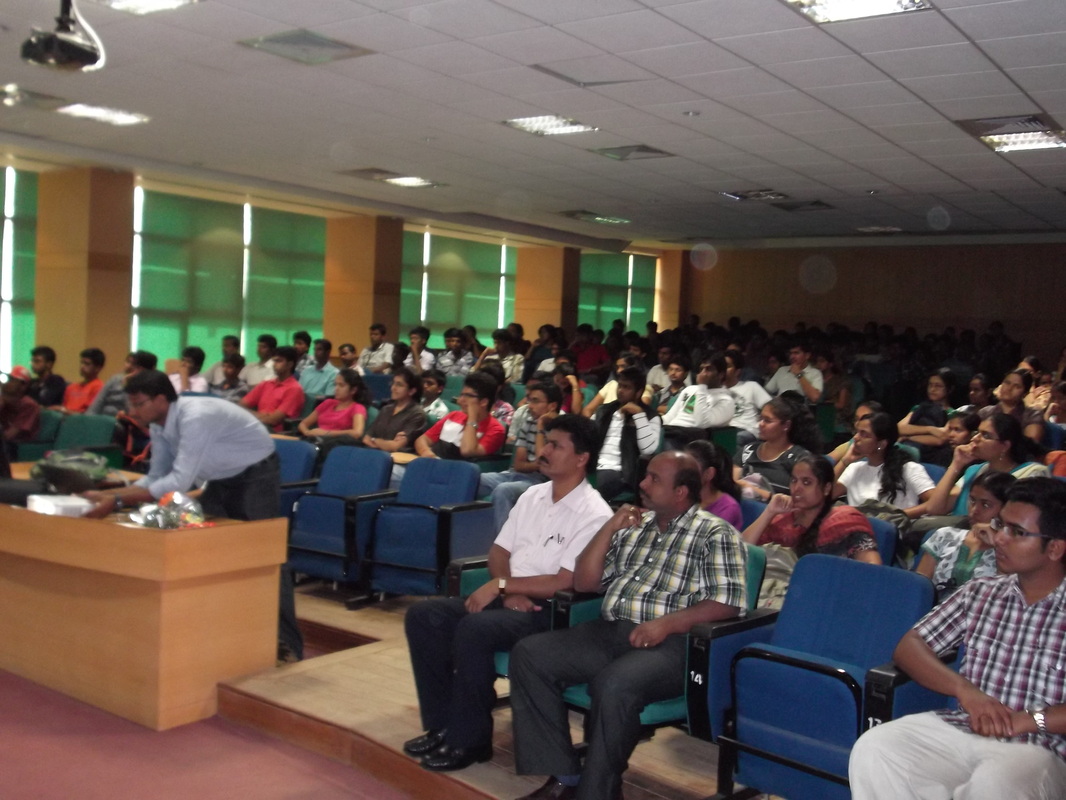
The day started off with talks. Surprisingly, we had a jam-packed auditorium.
- Talk 1: Jaykumar and Senthil from FSMK (Free Software Movement Karnataka) gave a brief talk on the ongoing free software movement and the need for a parallel hardware movement.
- Talk 2: I (Ashfaq) presented the idea of Freedom Hardware and its need in our world.
- Talk 3: Prof. Dinesh from IISc spoke about product development, inspiring students to start working on various projects.
- Talk 4: Aravind (Junior Research Fellow @ IISc) gave a demo of interfacing the Arduino and Raspberry Pi and controlling a motor over the internet.
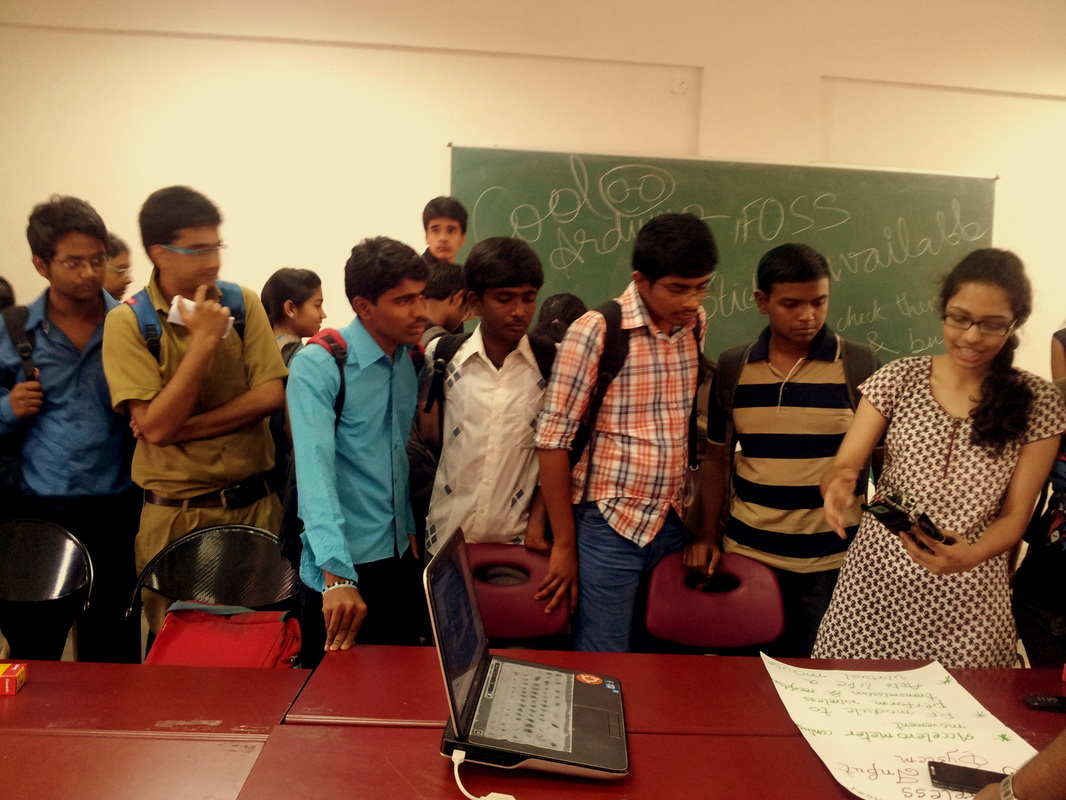
This was then followed by an open house exhibition. Students displayed projects done by them.
The projects on display
Hardware
- Line follower: a basic line follower made using a motor driver and IR sensors.
- Manual bot: a manually controlled wireless bot.
- Wi-Gi (Wireless Gesture Input): a glove which controls the mouse on your computer, taking the movements of the hand (using wireless communication).
- Kinect: a bot that follows you!
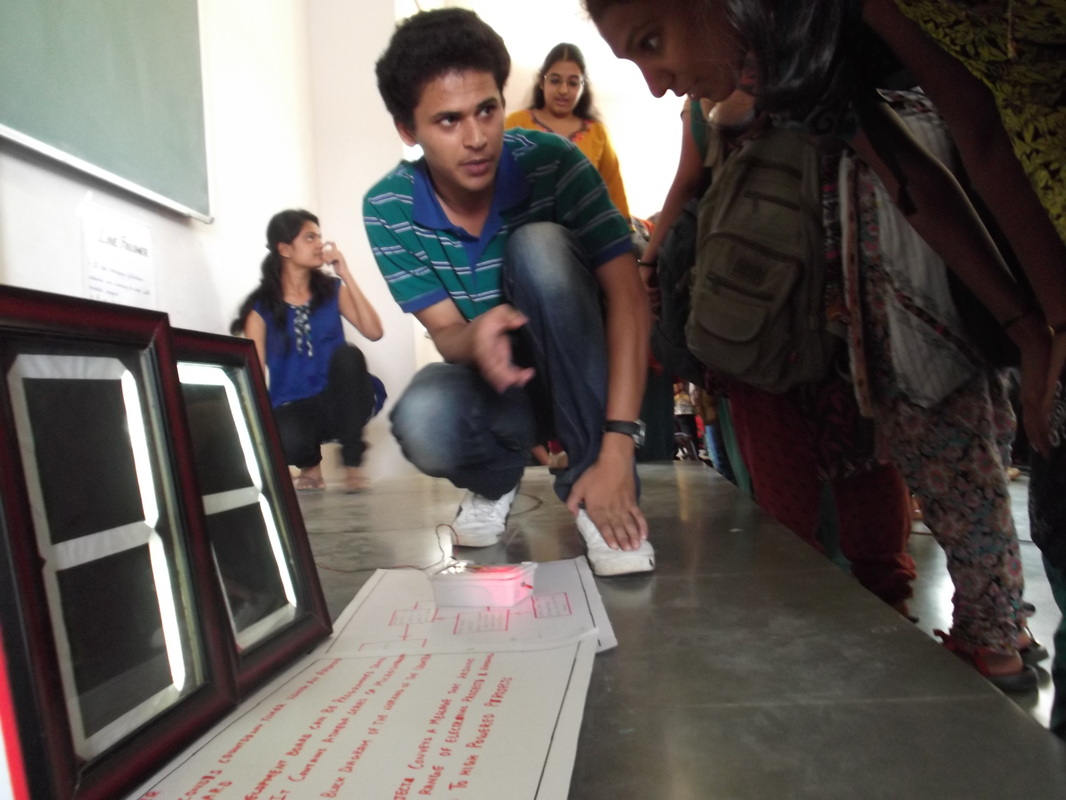
- 7-segment display: a basic 1ft by 1ft display made as a scoreboard for basketball matches, done by students.
- Speaker: a simple Arduino project which takes input from a TV remote (via IR) and plays a tone.
- PIR: the door was hooked up with a PIR sensor, which would count the number of people entering the hall.
- Power supply: the basic bridge power supply, used to explain basic capacitance to students.
- LED cube: using Arduino (4x4x4 cube).
- EMF sensor: an Arduino-based project that would display the reading of radiation present in the air.
And many more projects…
Software
- Web programming: a basic HTML website.
- Fun with Bash: explaining bash scripts.
- Blender: animation using Blender.
- Kernel compilation.
- Rahul’s table: Rahul, our web developer, explained various upcoming technologies in website building.
- Filters in Octave.
PCB design workshop
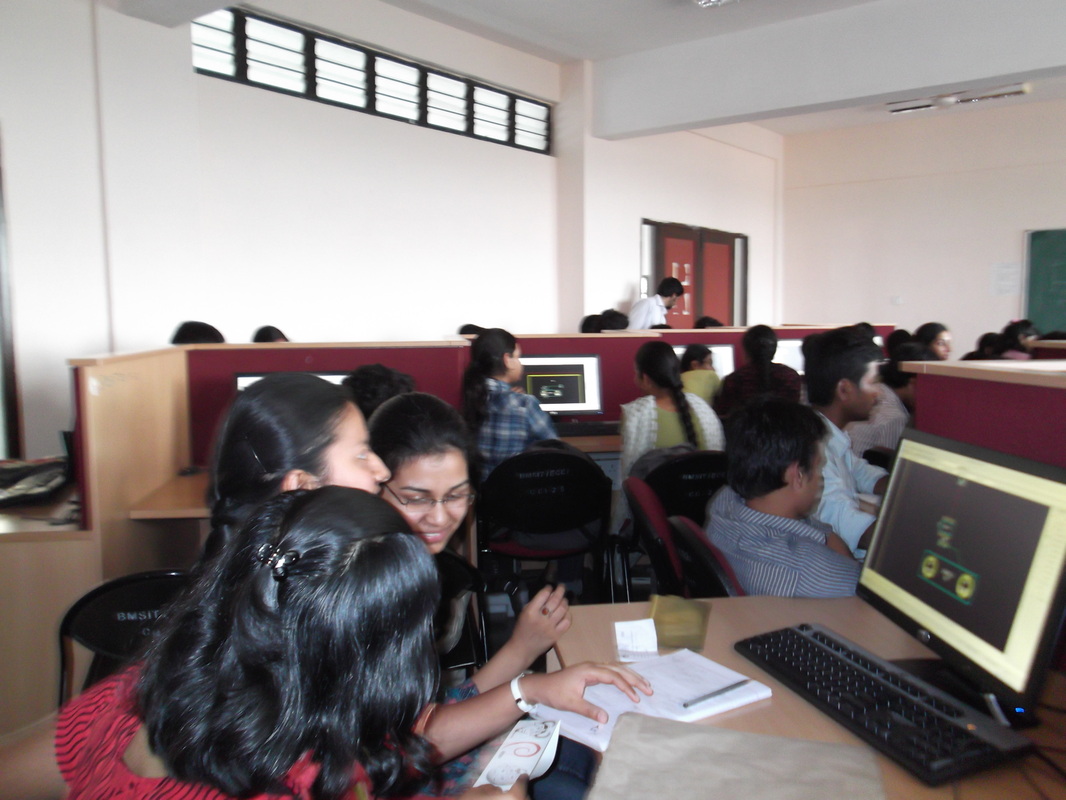
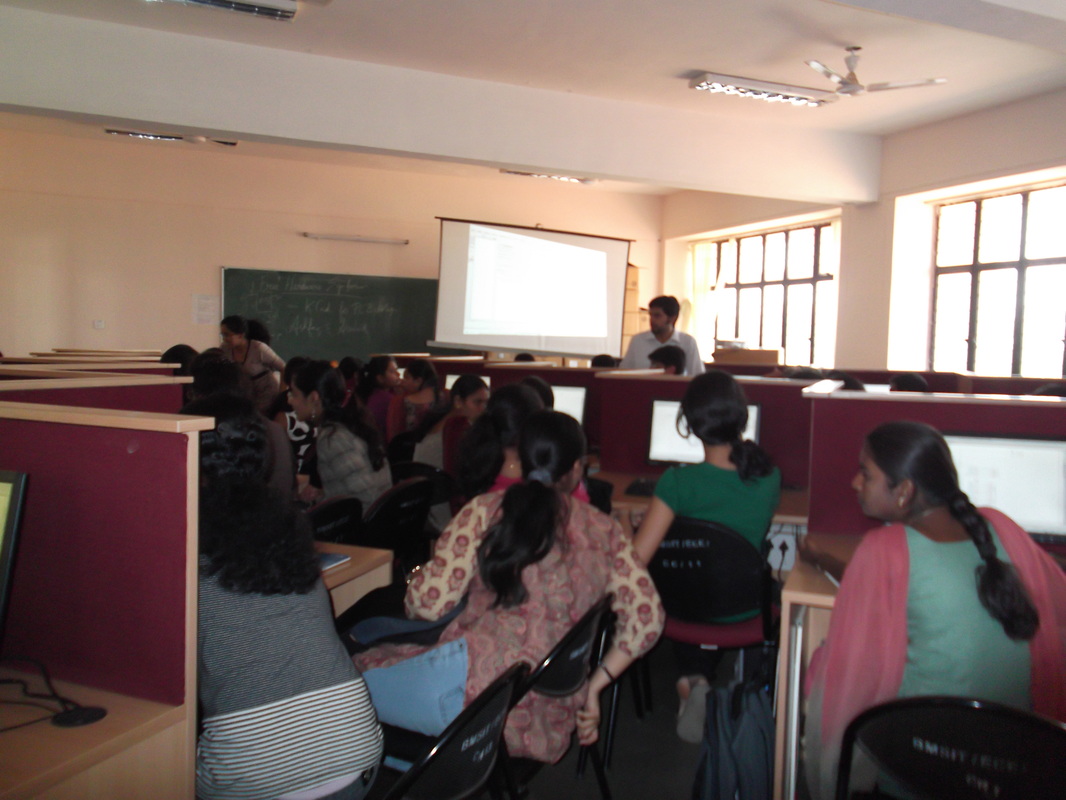
In parallel to the exhibition, a workshop on PCB designing was conducted. The workshop taught the students to use KiCad for designing PCBs, and also gave a brief explanation of how to fabricate them at home.
We had planned to cater to 30 students, but surprisingly we had more than 150 registrations. Hence the workshop was conducted in 3 sessions of about 45-50 students each.
The road ahead!
This event got many of the students interested in the movement. Now we plan to help them work on projects by providing technical support, and also by giving them a common platform to learn, share and teach.